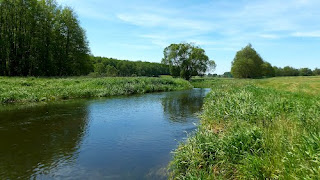
  | A battlefield 3,250 years ago in Germany is yielding remains of wounded warriors, wooden clubs, spear points, flint and bronze arrowheads and bronze knives and swords. The gruesome scene, frozen in time by peat, is unlike anything else from the Bronze Age in Northern Europe. No one knows who these people were who fought on the banks of the Tollense River in northern Germany near the Baltic Sea because there are no written records. |  |
 | Thousands of warriors came together in a brutal struggle using weapons crafted from wood, flint, and bronze, a metal that was then the height of military technology. Struggling to find solid footing on the banks of the Tollense River, a narrow ribbon of water that flows through the marshes of northern Germany toward the Baltic Sea, the armies fought hand-to-hand, maiming and killing with war clubs, spears, swords, and knives. Northern Europe in the Bronze Age was long dismissed as a backwater, overshadowed by more sophisticated civilizations in the Near East and Greece. Bronze itself, created around 3200 B.C.E., took 1000 years to arrive here. But Tollense’s scale suggests more organization—and more violence—than once thought. |
 | The battlefield was discovered in 1996 by an amateur archaeologist, who saw an arm bone sticking out of the riverbank. Embedded in the bone was a flint arrowhead. Archaeologists did some minor digging there at the time and found a bashed-in skull and a wooden club of 73 cm (29 inches). Radiocarbon dating showed they were from around 1250 BC. |
 | Researchers found additional bones of horses and men, many of them grievously wounded. They also excavated wooden clubs, flint and bronze arrowheads and bronze spearheads. They say there may be hundreds more men whose remains haven’t been excavated. |  |
The carnage stretches along 3 kilometers (1.86 miles) of the river, surprising the researchers. From the size of the site and remains found so far, they estimate there may have been 4,000 people involved in the battle. |  |


No comments:
Post a Comment
Note: Only a member of this blog may post a comment.